

Mold Inspection in Newark, DE
Newark's year-round humidity—characteristic of Delaware's transition zone between piedmont and coastal plain—creates persistent indoor moisture that favors mold growth, particularly in basements and crawl spaces common to older homes throughout the area. Mold inspection identifies moisture sources and affected materials before contamination spreads to occupied living spaces, protecting indoor air quality and structural integrity. Chase Mold Remediation connects Newark property owners with local inspection providers who can assess your home's moisture risk and recommend remediation tailored to your specific conditions.
What does a mold inspection look for in Newark, DE?
Before paying for sampling it is worth knowing what a result can and cannot establish. EPA publishes an answer, quoted here as written.
Surface sampling may be useful to determine if an area has been adequately cleaned or remediated.EPA
Sampling for mold should be conducted by professionals who have specific experience in designing mold sampling protocols, sampling methods and interpreting results.EPA
So sampling earns its place at the two ends of a job — confirming what is there when it is hidden, and confirming it has gone once the work is done. EPA is equally clear that it is not always needed: in most cases, if visible mold growth is present, sampling is unnecessary, and there is no federal number a result can be measured against.
In most cases, if visible mold growth is present, sampling is unnecessary.EPA
Standards or Threshold Limit Values (TLVs) for airborne concentrations of mold, or mold spores, have not been set.EPA
There is a reason to look harder here than the visible surface: New Castle County has recorded flood events in 29 separate years, most recently in 2026. Water that arrived years ago leaves growth behind whether or not anyone found it at the time.Source: NOAA Storm Events Database, New Castle County (1996-2026; Flood, Flash Flood and Coastal Flood events)
Why Newark Property Owners Need Mold Inspection
Newark's location in Delaware's transition zone between piedmont and coastal plain creates persistently humid conditions throughout the year, keeping indoor moisture levels elevated well beyond seasonal rainfall periods. This year-round humidity is particularly problematic in older homes with basements or crawl spaces—common in neighborhoods across Newark—where trapped moisture and poor ventilation create ideal conditions for mold to develop and spread. Without regular mold inspection, these hidden spaces can harbor active growth for months or years, gradually affecting indoor air quality and structural integrity before visible signs appear on walls or ceilings.
Chase Mold Remediation connects Newark property owners with local mold inspection providers who conduct thorough, room-by-room assessments to identify active growth, moisture sources, and areas of concern before problems escalate. The independent providers in our network approach each inspection systematically, using moisture detection and visual assessment to document findings and recommend next steps—whether that involves remediation, ventilation improvements, or preventive measures. If mold is found, you'll have a clear plan and direct access to the same local professionals who can address it, ensuring continuity from inspection through resolution and follow-up monitoring.
Why Newark Property Owners Choose Chase Mold Inspection
Fast Local Mold Inspection
Chase connects Newark property owners with independent local inspectors who respond quickly to mold concerns. Fast access to inspection means faster answers about indoor air quality and next steps.
Thorough Mold Inspection Process
Independent providers in the Chase network conduct detailed mold inspections using systematic methods to identify visible growth, moisture sources, and affected areas. Thorough inspection is the foundation for safe, effective remediation.
Clear Mold Inspection Communication
Inspectors explain findings in straightforward terms, so you understand what was found, where moisture is entering, and what remediation involves. Clear reporting helps you make confident decisions about your property.
Newark's Year-Round Moisture Challenge
Delaware's Piedmont-to-Coastal Plain transition means Newark experiences sustained indoor humidity levels throughout the year. Basements and crawl spaces in older neighborhoods are especially vulnerable to trapped moisture and mold growth without proper ventilation and sealing. Regular mold inspection catches moisture problems before they spread.
How Our Mold Inspection Process Works
Schedule Your Mold Inspection Visit
Contact Chase Mold Remediation to arrange a mold inspection appointment with a local provider serving Newark. A technician will visit your property to assess moisture levels, identify visible mold growth, and pinpoint potential problem areas.
Thorough Mold Inspection & Assessment
The inspector examines your home's vulnerable moisture zones—particularly basements and crawl spaces common in Newark's older neighborhoods, where trapped humidity year-round creates ideal conditions for mold colonization. The inspection documents findings and explains what remediation may be needed.
Connect With a Remediation Provider
Based on inspection results, Chase Mold Remediation connects you with a local independent provider qualified to handle mold removal and moisture control. The provider discusses remediation options, timelines, and next steps to restore healthy indoor air quality to your home.
Dealing with Mold Inspection in Newark? Get fast, professional help.
Call Now — (302) 775-9923Mold Inspection Across Newark and Surrounding Areas
Newark's location in Delaware's transition zone between the Piedmont and Coastal Plain means homes here contend with consistently elevated humidity levels throughout the year. This persistent moisture in the indoor environment—not limited to seasonal storms or wet weather—creates ideal conditions for mold growth in spaces where airflow and moisture control are compromised. Mold Inspection becomes especially important in older neighborhoods like Barksdale and College Park, where basements and crawl spaces are common features. These below-grade areas naturally trap humidity, and without proper ventilation or moisture sealing, they become vulnerable to hidden mold colonization that can spread undetected.
A thorough Mold Inspection across Newark helps property owners identify moisture accumulation and early mold activity before problems expand into living spaces or affect indoor air quality. Whether you're in an established neighborhood or newer development, connecting with a local mold inspection provider who understands how year-round humidity patterns affect properties in this region ensures you catch moisture issues early and take appropriate remediation steps to protect your home's structure and your family's health.
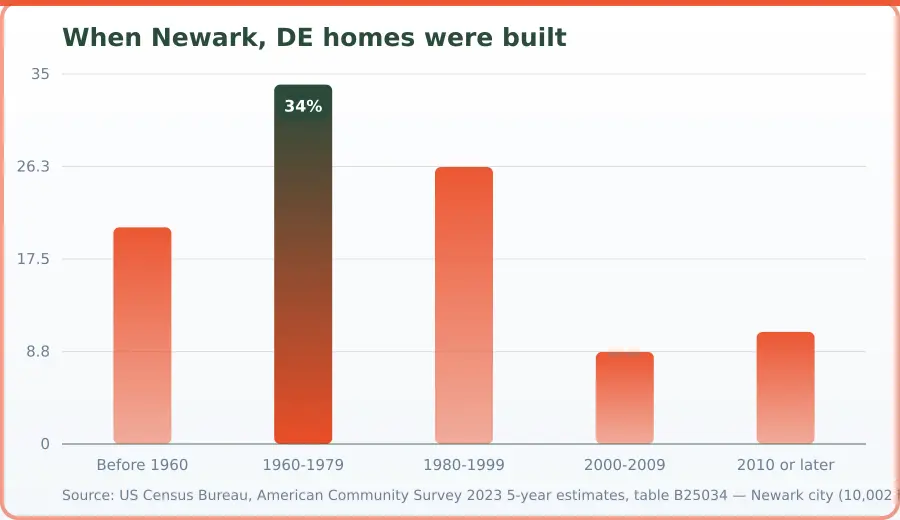
| Period | When homes were built (%) |
|---|---|
| Before 1960 | 20.5 |
| 1960-1979 | 34 |
| 1980-1999 | 26.2 |
| 2000-2009 | 8.7 |
| 2010 or later | 10.6 |
Source: US Census Bureau, American Community Survey 2023 5-year estimates, table B25034 — Newark city (10,002 housing units). Retrieved October 5, 2026.
Seasonal Mold Inspection Needs Across Newark
Spring: Rising Moisture
Spring thaw and increased rainfall elevate indoor humidity levels, creating ideal conditions for mold growth in basements and crawl spaces—areas already prone to trapped moisture year-round in Newark's region. Mold inspection in spring identifies active growth before it spreads further, helping property owners address foundation-area humidity early in the season.
Summer: Active Growth
Warm summer temperatures accelerate mold reproduction indoors, particularly in poorly ventilated spaces where moisture has accumulated. Professional mold inspection during summer documents the extent of growth and moisture sources, allowing independent local providers to recommend targeted remediation and ventilation improvements before fall.
Fall: Humidity Transitions
As outdoor air cools, property owners close windows and run heating systems less frequently, trapping indoor humidity and creating a secondary peak in mold activity. Fall mold inspection catches new or worsening growth before winter sealing intensifies moisture retention indoors.
Winter: Condensation Risk
Cold exterior walls and poor insulation cause indoor condensation to accumulate, especially in older homes around College Park and similar neighborhoods where basements and crawl spaces lack modern moisture controls. Winter mold inspection reveals condensation-driven growth and helps identify ventilation gaps that independent providers can address before spring moisture season returns.
Mold Inspection FAQs — Newark, DE
A mold inspection includes a visual assessment of your property's interior and exterior for signs of mold growth, moisture problems, and conditions that support mold. The inspector checks common problem areas like basements, crawl spaces, attics, and around windows and plumbing. They may use moisture meters and thermal imaging to detect hidden moisture. The goal is to identify existing mold and moisture sources so you understand the scope before any remediation work begins.
Chase Mold Remediation works to connect Newark property owners with local independent inspectors promptly. Response times depend on inspector availability in your area, but the referral process is designed to get you matched with a qualified provider as quickly as possible. Contact Chase with details about your property, and they'll help facilitate the connection to begin your inspection.
Mold inspection pricing varies based on property size, inspection scope, and whether additional testing or moisture detection tools are needed. The independent inspector you're connected with will discuss their pricing with you directly. Factors like accessibility of problem areas and the extent of visible moisture or mold signs may influence the final cost.
Before the inspection, make sure the inspector can access all relevant areas, including basements, crawl spaces, attics, and under-sink cabinets. Clear clutter from suspected problem zones and note any areas where you've noticed musty odors, discoloration, or moisture. Document any water damage history or leaks. The inspector will guide you through the process, but providing clear access and context helps them conduct a thorough evaluation.
Controlling indoor moisture is key to preventing mold recurrence. This includes improving ventilation in bathrooms and kitchens, using dehumidifiers in damp areas like basements, fixing leaks promptly, and ensuring gutters and downspouts direct water away from your foundation. Many Newark homes benefit from proper drainage and sealed crawl spaces or basements to reduce trapped humidity. Your remediation provider can recommend specific prevention measures after inspection findings.
Newark's consistently elevated indoor humidity throughout the year creates ideal conditions for mold growth, especially in basements and crawl spaces where moisture naturally accumulates. Unlike seasonal concerns alone, persistent dampness indoors means mold can develop in any season without proper ventilation and moisture control. Regular mold inspection helps catch problems early before they spread, protecting your property and indoor air quality.
Related Services
Homeowner Safety Toolkit
Verify Your Newark, DE Mold Remediation Company
Before you hire anyone, use these independent national resources to confirm credentials, standards, and track record.
EPA
The federal government's own guidance on identifying, cleaning up, and preventing mold growth in a home.
Mold Prevention GuideIICRC
Publishes the S520 standard for professional mold remediation. Confirm a company's technicians hold real, current IICRC certification before you hire them.
Verify CertificationCDC
Covers the health effects of mold exposure and safe cleanup practices, separate from the remediation work itself — useful if anyone in the home has respiratory symptoms.
Mold Health GuideDealing with Mold Inspection in Newark, DE? Call (302) 775-9923 for 24/7 help.
Call Now — (302) 775-9923Areas We Serve in Newark, Delaware
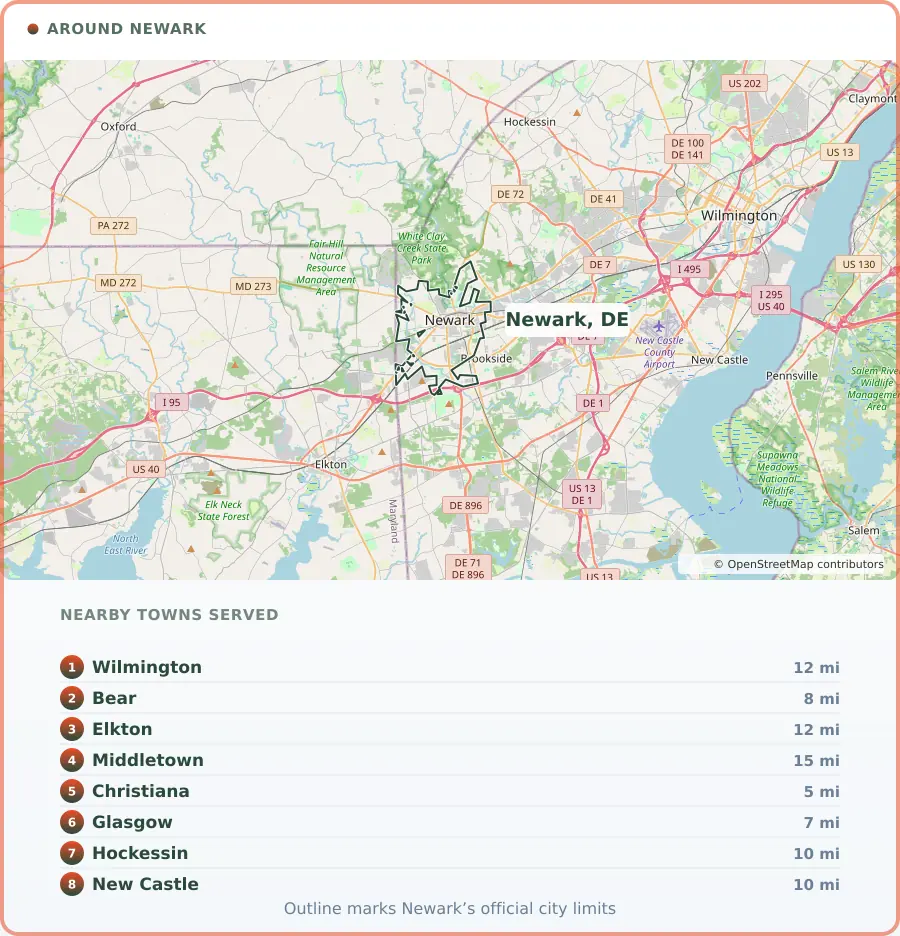
Serving Newark, DE and 8 communities around it. Local knowledge of how each area is built shapes how the work is handled there.
Newark, DE Information
Newark, Delaware is a college town with a diversified backbone. The University of Delaware sets the rhythm of daily life here, fueling steady work in education, research, and healthcare, while major financial employers like Bank of America, JPMorgan Chase, and Capital One keep the local economy humming well beyond campus. Add in a longstanding chemical and biotech presence tied to the state's DuPont heritage, with companies like AstraZeneca and W.L. Gore & Associates in the mix, and you get a city of roughly 31,000 residents that rarely leans on any single industry.
That balance shows up in the neighborhoods, too. From the walkable energy of Downtown Newark to the quieter streets of College Park, the city blends student life with family roots and genuine small-town character, all tucked into the heart of the Delaware Valley.
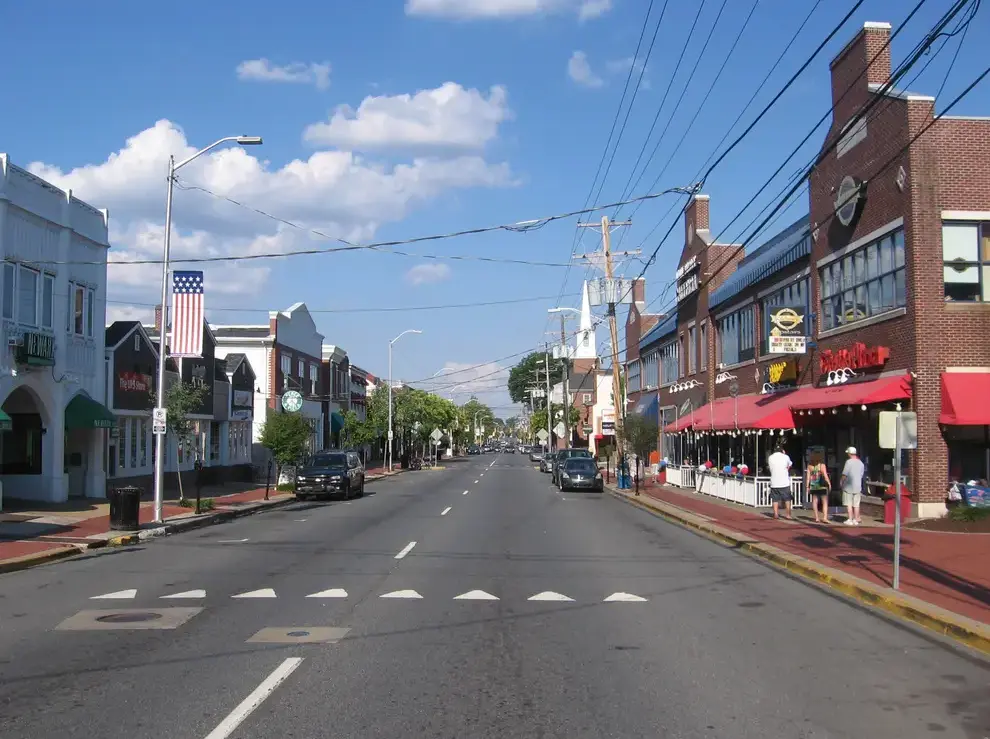
Photo: PookieFugglestein, CC0