

Ceiling Mold Removal in Newark, DE
Newark's year-round humidity creates persistent indoor moisture that makes ceiling mold a common concern in older homes throughout the area, particularly in properties where upper-level ventilation or roof sealing has deteriorated over time. Ceiling mold removal requires prompt attention to prevent structural damage to framing and drywall while protecting your indoor air quality. Chase Mold Remediation connects Newark property owners with local independent providers who can assess ceiling mold thoroughly and handle safe removal, so you can restore your home to a healthier condition.
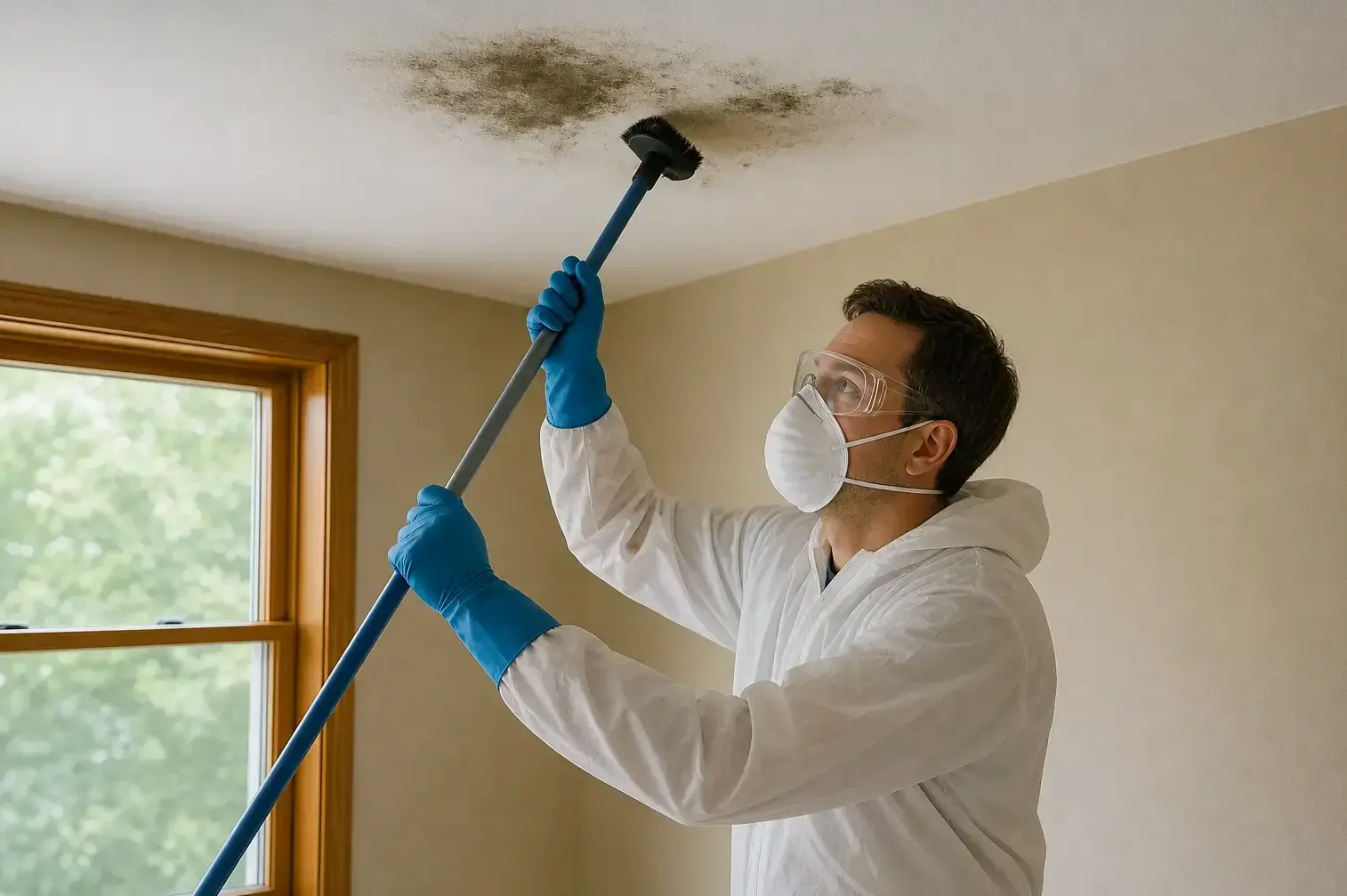
What gets cleaned on a ceiling, and what comes out
Two questions decide the scope of any mold job: what is it growing on, and how much of it is there. The EPA publishes an answer for both, and this is that guidance applied to the materials you would expect on a ceiling.
| Material | Under 10 sq ftabout a cabinet door, or one ceiling tile | 10 to 100 sq ftroughly one wall, or a small bathroom | Over 100 sq ftmore than one room's worth of surface |
|---|---|---|---|
| Wallboardthe ceiling drywall itselfEPA, Table 2 | HEPA vacuum | HEPA vacuumRemove and discard | HEPA vacuumRemove and discard |
| Wood surfacesjoists and framing in the cavity aboveEPA, Table 2 | Wet vacuumDamp wipeHEPA vacuum | Wet vacuumDamp wipeHEPA vacuum | Wet vacuumDamp wipeHEPA vacuumRemove and discard |
What those methods mean, in EPA's words
- Wet vacuum
Wet vacuums are vacuum cleaners designed to collect water. They can be used to remove water from floors, carpets and hard surfaces where water has accumulated.
EPA, cleanup methods- Damp wipe
Mold can generally be removed from nonporous (hard) surfaces by wiping or scrubbing with water, or water and detergent.
EPA, cleanup methods- HEPA vacuum
HEPA (High-Efficiency Particulate Air) vacuums are recommended for final cleanup of remediation areas after materials have been thoroughly dried and contaminated materials removed.
EPA, cleanup methods- Remove and discard
Building materials and furnishings that are contaminated with mold growth and are not salvageable should be double-bagged using 6-mil polyethylene sheeting.
EPA, cleanup methods
Removed and replaced, whatever the area
- Ceiling tiles — drop-ceiling or acoustic tiles.
Discard and replace.
EPA, Table 1This is the action EPA's water-damage table gives for ceiling tiles. It is the one material here with no size threshold to weigh. - Fiberglass or other insulation — any insulation sitting on top of the ceiling.
Fiber glass, or any other insulation material that is wet or visibly moldy (or if an unacceptable odor is present) should be removed and replaced by a qualified heating and cooling system contractor.
EPA, air duct cleaningEPA states this in its heating-and-cooling guidance and it is quoted here as written. Its water-damage table reaches the same conclusion for both fiberglass and cellulose insulation.
These guidelines are for damage caused by clean water. If you know or suspect that the water source is contaminated with sewage, or chemical or biological pollutants, then Personal Protective Equipment and containment are required by OSHA.
EPA, Table 1Porous materials that are wet and have mold growing on them may have to be discarded.
EPA, cleanup methodsMold can grow on wood, drywall, carpet and furniture if they remain wet for more than 24 hours.
EPA, flood cleanup
Ceiling mold nearly always means water arriving from above — a roof, a supply or waste line, or a bathroom on the floor above. The ceiling is the symptom, so cleaning it without finding the source buys a few months at most. Drop-ceiling tile is the one material here with no decision to make: EPA's water-damage table lists it as discard and replace.
Newark gets around 12.7 days a year with an inch or more of rain, most of them in March — and a downpour finds a flashing or a seal that a drizzle never would.Source: NOAA 1991-2020 Climate Normals, NEWARK AG FARM, DE US station (1.1 mi from Newark)
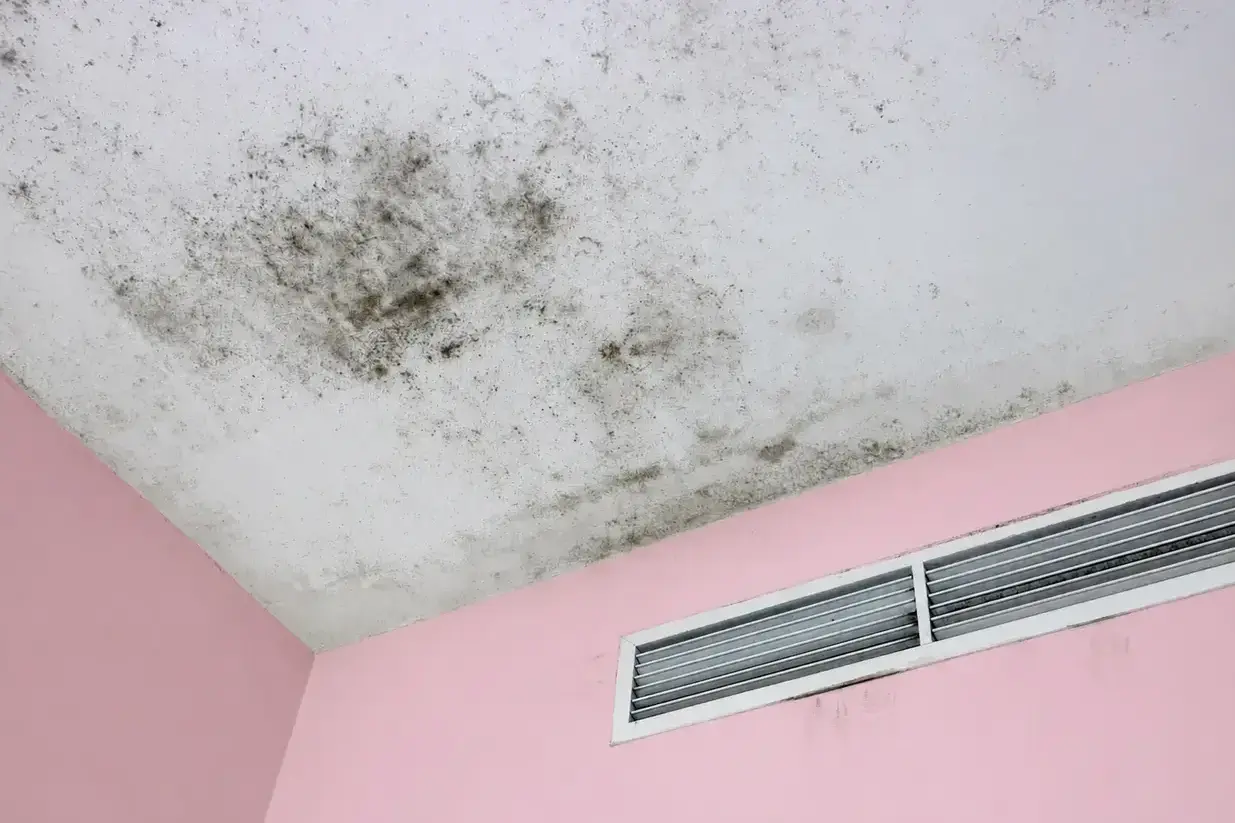
Ceiling Mold Removal Services for Newark, DE Homes
Newark's year-round humid climate creates persistent indoor moisture levels that make ceiling mold a common concern for property owners. The consistent humidity that defines the region means moisture can accumulate in attic spaces, above bathroom fixtures, and in areas around roof penetrations or poorly sealed ductwork—especially in older homes throughout Newark where ventilation systems may be outdated or insufficient. When moisture gets trapped above your ceiling, mold can develop silently behind drywall and insulation, only becoming visible once it has already spread. Early detection and removal are essential to prevent structural damage and maintain healthy indoor air quality in your home.
Chase Mold Remediation connects Newark property owners with local providers who specialize in ceiling mold removal and understand the moisture challenges specific to homes in this area. These independent specialists begin with a thorough inspection to identify the mold's full extent and trace its source—whether it stems from roof leaks, condensation, or ventilation issues—so the underlying cause can be addressed. The removal process includes safe containment and removal of affected materials, followed by proper drying and prevention measures to reduce the risk of recurrence. By focusing on both the mold itself and the moisture conditions that allowed it to form, this approach helps restore your ceiling and protect your home's long-term health.
Why Newark Property Owners Choose Chase Mold Remediation
Fast Ceiling Mold Removal
Chase connects you with local providers who respond quickly to ceiling mold concerns. Rapid assessment and removal minimize exposure time and prevent the problem from spreading further into your home's structure.
Thorough Ceiling Mold Treatment
Independent local providers handle complete removal, addressing not just visible mold but hidden growth within ceiling cavities and above drop ceilings. Comprehensive treatment reduces the likelihood of recurrence and restores indoor air quality.
Clear Communication Throughout
Chase ensures you stay informed at every step of ceiling mold removal. Providers explain findings, treatment methods, and next steps in plain language so you understand what's happening and why.
Year-Round Humidity Control Matters
Newark's humid climate keeps indoor moisture levels elevated throughout the year, making ceiling spaces particularly vulnerable to mold growth regardless of season. Homes in established neighborhoods like Downtown Newark and College Park often face persistent moisture challenges that favor mold development in overhead areas without proper ventilation and moisture management.
How The Ceiling Mold Removal Process Works
Schedule Your Ceiling Mold Removal Visit
Contact Chase Mold Remediation to describe ceiling mold growth you've noticed in your Newark home. We'll connect you with a local independent provider who can arrange an inspection to assess the extent of ceiling mold and identify moisture sources driving its growth.
Inspect and Diagnose Ceiling Mold
The independent provider examines your ceiling mold, checks surrounding areas for hidden growth, and pinpoints why moisture is accumulating—especially important in Newark, where year-round humidity often keeps indoor moisture levels elevated. This diagnosis guides the removal approach and helps prevent recurrence.
Remove Ceiling Mold and Restore Air Quality
The provider removes affected ceiling materials safely, addresses the underlying moisture or ventilation issue, and restores the area to help return your indoor air quality to normal. Follow-up guidance is provided to help protect your ceiling from future mold growth.
Dealing with Ceiling Mold Removal in Newark? Get fast, professional help.
Call Now — (302) 775-9923Ceiling Mold Removal Across Newark, DE
Newark's location in Delaware's transition zone between the Piedmont and Coastal Plain creates consistently elevated indoor humidity throughout the year—not just during wet seasons. This persistent moisture environment is a primary driver of ceiling mold growth in homes and businesses across the area. Basements and crawl spaces, especially common in older neighborhoods like College Park and Barksdale, are particularly vulnerable to trapped humidity that rises into upper-level framing and drywall if ventilation and moisture barriers are inadequate. Ceiling mold often develops quietly in these conditions, making early detection and removal essential before structural integrity or indoor air quality is compromised.
The independent local providers we connect you to understand how Newark's year-round humidity patterns affect where mold takes hold—and why ceilings in older construction are frequent trouble spots. Whether mold appears in a finished attic space, a basement ceiling, or upper-floor drywall, a thorough removal approach addresses both the visible growth and the underlying moisture source that allowed it to establish. Chase Mold Remediation connects Newark property owners with local providers ready to assess and remove ceiling mold and help restore safer indoor conditions.
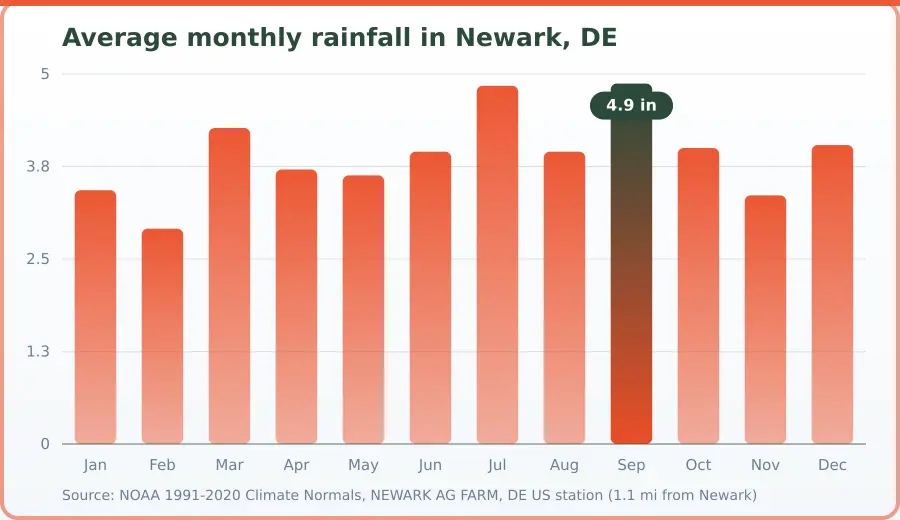
| Period | Monthly rainfall (in) |
|---|---|
| Jan | 3.4 |
| Feb | 2.9 |
| Mar | 4.3 |
| Apr | 3.7 |
| May | 3.6 |
| Jun | 4 |
| Jul | 4.8 |
| Aug | 4 |
| Sep | 4.9 |
| Oct | 4 |
| Nov | 3.4 |
| Dec | 4 |
Source: NOAA 1991-2020 Climate Normals, NEWARK AG FARM, DE US station (1.1 mi from Newark). Retrieved October 5, 2026.
Seasonal Ceiling Mold Removal Challenges in Newark
Spring: Thaw and Moisture Surge
As snowmelt and spring rains increase water intrusion into homes, ceiling mold often becomes visible in attics, upper-story rooms, and around roof penetrations. Chase Mold Remediation connects Newark property owners with local providers who identify and safely remove ceiling mold before it spreads through the warmer months ahead.
Summer: Heat and Humidity Acceleration
Summer's warmth and elevated indoor humidity accelerate ceiling mold growth, particularly in poorly ventilated upper areas where moisture becomes trapped. Local providers through Chase assess attic ventilation, moisture barriers, and remove active ceiling colonies to restore air quality and prevent structural damage to framing and insulation.
Fall: Pre-Winter Inspection and Removal
Fall is an ideal time to address ceiling mold before heating systems are activated and windows close for winter, sealing moisture inside. Chase Mold Remediation helps property owners in neighborhoods like College Park and Downtown Newark connect with local professionals who inspect and remediate ceiling mold to prevent indoor humidity buildup during colder months.
Winter: Trapped Moisture and Condensation
Winter heating and reduced outdoor air exchange cause indoor humidity to concentrate in ceiling cavities and attics, where trapped moisture fuels mold growth. Because homes and older buildings in the Newark area often retain elevated moisture in basements and crawl spaces year-round, this condition intensifies aloft, and Chase Mold Remediation connects you with local providers equipped to safely contain and remove ceiling mold during the season when ventilation is most restricted.
Ceiling Mold Removal FAQs — Newark, DE
Ceiling mold removal typically begins with inspection to identify the extent of mold growth and any moisture source feeding it. The local provider will contain the affected area to prevent spore spread, remove contaminated materials (drywall, insulation, or tile), treat the underlying surface, and restore the ceiling. The process also addresses what caused the mold—often moisture intrusion or humidity—to help prevent recurrence.
Chase Mold Remediation works to connect Newark property owners with local independent providers promptly. Response time depends on provider availability in your area. Once connected, the provider can often schedule an inspection within days. For urgent situations where mold is spreading or affecting indoor air quality, mention this when you reach out so the provider can prioritize your case.
Ceiling mold removal pricing depends on the size of the affected area, how deep the mold has penetrated materials, whether the moisture source requires repair, and the complexity of containment and restoration. Access and ceiling height also matter. The independent provider you're connected with will assess your specific situation and provide pricing details during inspection.
Before removal starts, clear the room of personal items and furniture if possible, as the provider may need full access to the ceiling. Close off the work area from the rest of your home to contain dust and debris. Your provider will give you specific preparation instructions and may ask you to leave during the work or limit occupancy to certain areas. Ask about safety precautions and how long the job typically takes.
After removal, reduce indoor humidity by improving ventilation—run bathroom and kitchen exhaust fans, ensure they vent outside, and keep moisture-prone areas dry. Address any roof leaks, plumbing issues, or condensation sources promptly. In older homes with basements or crawl spaces common to Newark neighborhoods, proper ventilation and moisture control in those areas help prevent humid air from rising into upper levels, where it can settle on ceilings.
Newark's year-round elevated indoor moisture levels mean mold can develop and return more easily if humidity isn't managed after removal. This underscores the importance of addressing the moisture source during remediation—not just removing visible mold. Your provider will focus on drying the area thoroughly and may recommend ongoing humidity monitoring or ventilation improvements to protect your newly cleaned ceiling long-term.
Related Services
Homeowner Safety Toolkit
Verify Your Newark, DE Mold Remediation Company
Before you hire anyone, use these independent national resources to confirm credentials, standards, and track record.
EPA
The federal government's own guidance on identifying, cleaning up, and preventing mold growth in a home.
Mold Prevention GuideIICRC
Publishes the S520 standard for professional mold remediation. Confirm a company's technicians hold real, current IICRC certification before you hire them.
Verify CertificationCDC
Covers the health effects of mold exposure and safe cleanup practices, separate from the remediation work itself — useful if anyone in the home has respiratory symptoms.
Mold Health GuideDealing with Ceiling Mold Removal in Newark, DE? Call (302) 775-9923 for 24/7 help.
Call Now — (302) 775-9923Areas We Serve in Newark, Delaware
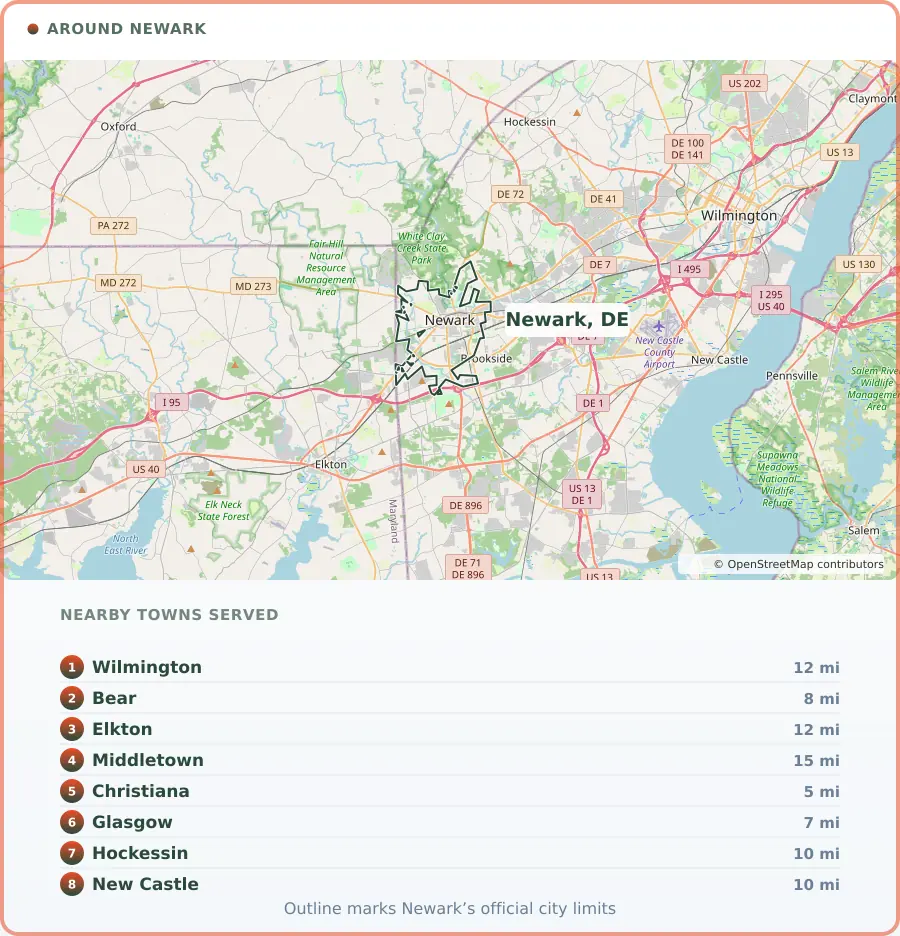
Serving Newark, DE and 8 communities around it. Local knowledge of how each area is built shapes how the work is handled there.
Newark, DE Information
Newark, Delaware is a college town with a diversified backbone. The University of Delaware sets the rhythm of daily life here, fueling steady work in education, research, and healthcare, while major financial employers like Bank of America, JPMorgan Chase, and Capital One keep the local economy humming well beyond campus. Add in a longstanding chemical and biotech presence tied to the state's DuPont heritage, with companies like AstraZeneca and W.L. Gore & Associates in the mix, and you get a city of roughly 31,000 residents that rarely leans on any single industry.
That balance shows up in the neighborhoods, too. From the walkable energy of Downtown Newark to the quieter streets of College Park, the city blends student life with family roots and genuine small-town character, all tucked into the heart of the Delaware Valley.

Photo: PookieFugglestein, CC0